


A table for one is becoming a more familiar sight across London.
Eating alone was once often associated with business travel, having no one available to join you or simply grabbing a quick meal. Today, it can be a deliberate choice — a lunch between meetings, dinner after work, a meal during a day out or simply some uninterrupted time for yourself.
OpenTable’s UK research found that 72% of consumers surveyed with an interest in solo travel planned to dine alone, while bookings for solo dining in the UK increased by 14% during the measured period.
The figures do not mean that most Londoners are suddenly eating alone. Instead, they point to a wider change in how people use the city: dining does not always have to be a group activity.
London Is Becoming More Comfortable With a Table for One
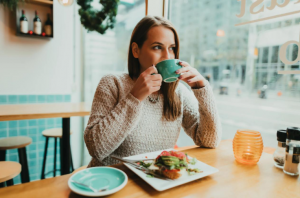 London has always been a city where people move independently.
People commute at different times, work changing schedules, travel across the capital for meetings and often finish their day far from home. For someone with a busy routine, waiting for friends or family to be available before going out for a meal is not always practical.
That makes solo dining a natural extension of city life.
A person might stop for lunch near the office, have dinner after an evening event or choose a restaurant while exploring an unfamiliar part of London.
The important change is not necessarily that people suddenly want to be alone. It is that being alone in a restaurant is becoming less socially unusual.
Younger Diners Choose to Eat Alone
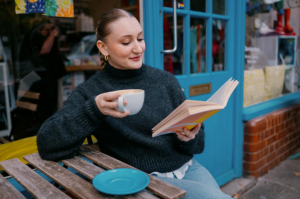
The shift is particularly noticeable among younger consumers.
OpenTable and KAYAK found that 79% of Gen Z respondents and 78% of Millennials surveyed said they planned to dine solo. The research was conducted among UK consumers with an interest in solo travel, so it should not be treated as a survey of all young people in the UK.
However, it does indicate that independent experiences are becoming more accepted among younger consumers.
For someone already comfortable travelling, shopping, visiting attractions or going to events alone, eating alone can feel like a natural part of the same lifestyle.
It also removes one of the biggest compromises of group dining: everyone has to agree on the same place, time and food.
When dining alone, the decision is entirely personal. And many often share their experiences online so technically, they’re not really alone.
The Appeal Is Often About Time and Choice, Not Loneliness
One of the more interesting aspects of the solo dining trend is why people choose to eat alone.
According to OpenTable and KAYAK research, 28% of respondents said that enjoying “me time” was their main reason for dining solo, while 25% valued the freedom to choose where they wanted to eat.
That suggests the experience is increasingly connected with personal freedom and control over time.
A solo meal can give someone the chance to:
- slow down after a busy day
- read or catch up on something
- work between appointments
- try somewhere new
- eat at a preferred time
- combine food with shopping, sightseeing or entertainment
For Londoners constantly moving between work, home and social commitments, that flexibility can be valuable.
So the story is not simply about people having fewer people to eat with. It is also about people becoming more comfortable choosing an experience for themselves.
London’s Food Scene Already Suits Independent Diners
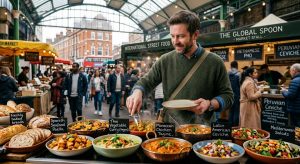
London does not need to create a completely new restaurant culture for solo diners.
The city already has cafés, pubs, food markets, casual restaurants and formal dining venues where a single customer can arrive without making the experience feel unusual.
A person might want a quick lunch, while another may deliberately choose a longer dinner. Someone else might simply want a drink and something to eat while exploring a neighbourhood.
That variety makes London’s food scene particularly suitable for independent diners.
For example, someone looking for a traditional weekend meal can explore Sunday lunch options across London, while someone wanting a more informal and cosy setting can discover London pubs for food and drinks.
The point is that solo diners do not necessarily need restaurants designed specifically for one person. They can use the same food scene as everyone else on their own terms.
The Seating Experience Can Make a Difference
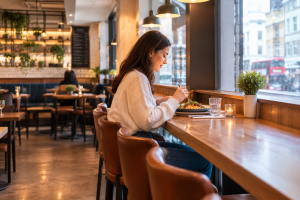
Being able to eat alone and feeling comfortable eating alone are not always the same thing.
A large table in the middle of a busy restaurant can make one person feel more visible. Counter seating, bar seating, window seats and smaller tables can make the experience feel much more natural.
This is where restaurant design becomes part of the solo-dining conversation.
A counter seat can give a solo customer somewhere comfortable to eat without making them feel as though they are occupying space intended for a larger group. It can also create a more informal atmosphere where customers can observe the restaurant around them without feeling isolated.
For restaurants, flexible seating has another advantage: it can help make better use of limited space.
That is particularly relevant in busy parts of London, where every table can be commercially important.
The Bigger Problem May Be Booking, Not Dining
While the experience itself is becoming more accepted, booking a table for one can still be less straightforward than booking for two.
A Solo Table 2026 study of 200 London restaurants found that, among 178 restaurants where a direct comparison was possible, 22 offered fewer online booking options for one person than for two — approximately one in eight restaurants in the study!
At the same time, the study found that 156 of the 178 comparable restaurants offered equal availability for one and two people.
That gives the finding important context.
London’s restaurant industry is not broadly preventing solo customers from booking. Instead, some restaurants and reservation systems have not completely adapted to the idea that one person may want to reserve during the same periods as larger parties.
For someone looking for dinner after work, that small difference can matter.
If booking for one is unavailable while booking for two is possible, the customer may simply choose another restaurant.
A Solo Customer May Spend More

There is also a business reason for restaurants to take solo dining seriously.
OpenTable’s UK booking data found that solo diners spent £55 per person on average, which was 32% higher per person than the average across other party sizes during the measured period.
This does not mean every solo diner spends more than every group. It is an average from the booking data.
But it does challenge the assumption that a table for one automatically represents a lower-value customer.
A solo diner may be a local resident, business traveller, tourist or regular customer. They may also return to a restaurant because the experience is convenient and comfortable or recommend it.
For restaurants, the opportunity is therefore relatively simple: make solo dining easy without making it feel like a separate experience.
London’s Eclectic Food Choices Work for Solo Diners
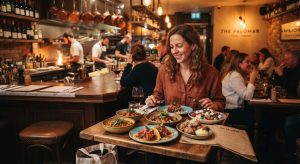
Another reason solo dining fits naturally into London’s food culture is the range of dining formats available.
A customer can choose entirely according to their own preferences.
Someone might want a quick meal near work. Another person might prefer an all-you-can-eat experience where they can choose exactly what they want without negotiating with a group, while someone else may want a particular cuisine or dietary option.
This is where the city’s variety becomes useful. A person looking for a flexible meal can explore London’s buffet dining options, while someone following a plant-based diet can choose from vegan dining options across London without having to find a compromise that works for an entire group.
One of the understated advantages of eating alone is simple: there is no need to compromise on the meal.
Work and Location Are Shaping the Solo Dining Trend Too
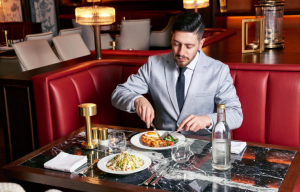
Solo dining also fits naturally around the way people work and move through London’s business hubs.
Someone working in Canary Wharf may finish work and want to eat nearby rather than travel across the city to meet friends. A business traveller may need dinner without colleagues. A visitor may have several hours between activities and choose a restaurant independently.
Different parts of London therefore create different reasons for eating alone.
For example, the concentration of offices, restaurants and leisure spaces in Canary Wharf makes it a natural area for people to combine their working day with eating out, including the restaurants and outdoor dining options around Canary Wharf.
The same pattern can be seen across London’s business and entertainment districts.
Visitors Add Another Layer to London’s Solo Dining Culture
Not every solo diner is a London resident.
The capital attracts domestic day visitors, business travellers and international tourists throughout the year. Many of these visitors may be exploring the city independently.
According to Visit Britain’s London 2024 domestic day-visit figures, the capital recorded 188.6 million domestic day visits, accounting for 21% of all domestic day visits in England.
Not all of these visitors dine alone, but the scale of London’s visitor economy means there are always people moving through the city who may need to eat independently.
For them, a restaurant is often simply one part of a wider day, but equally important for their overall experience.
A meal might sit between shopping and sightseeing, follow an event or become part of an evening exploring London. Someone may also combine food with one of the capital’s immersive experiences and activities.
This makes flexible dining useful not only for London residents but also for people temporarily visiting the city.
One-Person Living Provides a Wider Context
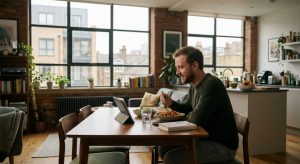
There is also a broader change in household patterns as seen in a press release we published on the UK’s top places for singles.
The latest ONS figures show that 8.6 million people in the UK lived alone in 2025, representing 29.5% of households.
These figures are UK-wide rather than London-specific, and living alone does not automatically mean someone eats alone.
However, they provide useful context for the wider shift towards services that accommodate individuals as well as couples, families and groups.
Restaurants are part of that change.
The assumption that every customer arrives with another person is becoming less useful across modern consumer services.
Solo Dining Does Not Mean Social Dining Is Disappearing
It would be wrong to view the rise of solo dining as the decline of social dining. Londoners will continue to meet friends for dinner, celebrate birthdays, go on dates, have Sunday lunches and meet colleagues after work.
The change is that these are no longer the only reasons people go out to eat. A person can enjoy a social meal on Friday and deliberately eat alone on Tuesday. They can go to a pub with friends one evening and choose a restaurant by themselves another. They can spend a weekend exploring London alone and still enjoy its food, entertainment and nightlife.
Even dog owners can combine independent plans with eating out, making dog-friendly restaurants and pubs in Central London another example of how London’s leisure culture can accommodate different routines. The common theme is flexibility rather than isolation.
What This Means for London’s Restaurants
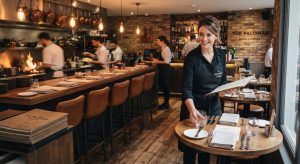
The rise of solo dining does not mean restaurants need to redesign their entire businesses around individual customers.
Instead, it highlights several practical areas where greater flexibility can improve the experience for solo diners who might review a business or restaurant based on this.
To optimise a venue for solo customers, consider opportunities:
1. Make booking for one simple
If a customer can reserve online for two but cannot easily reserve for one, they may simply choose another restaurant.
2. Think about flexible seating
Counters, smaller tables and other seating arrangements can make individual diners feel more comfortable while helping restaurants manage their space.
3. Treat solo customers normally
A person dining alone should feel like an ordinary customer, not someone occupying a table that was supposedly intended for a couple or group of people.
4. Recognise different dining occasions
Solo customers may be looking for a quick lunch, a quiet dinner, a meal after work or somewhere to eat between activities.
The opportunity is therefore not about prioritising solo diners over groups. It is about recognising that customers can arrive in different ways and still want the same quality of hospitality.
Why Is Solo Dining Growing in London?
There is no single reason behind the change.
Instead, several trends are coming together:
- People are becoming more comfortable with independent experiences
- Work and daily schedules are becoming more flexible and move online
- Personal time is increasingly valued
- Younger consumers are familiar with solo travel and independent activities
- London’s food scene already offers flexible dining formats
- The capital attracts millions of visitors and solo travellers
- Restaurants and booking systems are gradually adapting to different party sizes
Together, these changes are making a table for one feel less unusual.
The interesting part is not that London has suddenly discovered how to eat alone.
It is that people are increasingly comfortable choosing to do so.
The London Life Takeaway
Solo dining is becoming a more natural part of London’s food culture, whether for work, travel, personal time, or simply the freedom to choose where to eat.
For restaurants, making solo diners feel comfortable — with easy booking, suitable seating and flexible options — can help create a better customer experience.
Have you noticed more people dining alone in London, or do you have insights into how restaurants are adapting to this trend? Get in touch to share your experience, insights or perspective with our London business community.
Disclaimer: All information was correct at the time of publication and was compiled using available data with AI-assisted research.
Author Profile

- Informed content writer and creator in the UK, always on the lookout for new stories, developments and trends to share.
Latest entries
 DictionaryOctober 20, 2026The Rise of Solo Dining in London: Why is a Table for One Trending?
 HospitalitySeptember 24, 2026London Fashion Week Places To Know: 10 Iconic Spots For Fashionistas
 BusinessAugust 1, 2026How London Startups Manage Space on a Tight Budget
 Business AdviceJuly 1, 2026How London Contractors Save Money When Purchasing Plasterboard Without Compromising Quality