

Opinion piece by Danny King, Head of Stores at Attic Self Storage
A new report from Attic Self Storage reveals that Londoners’ ever-changing leisure pursuits are having an unintended impact on both the city’s already squeezed living spaces and its growing waste problem. As trends shift rapidly and new hobbies promise quick fulfilment, many activities are proving short-lived — leaving behind clutter, discarded equipment, and environmental consequences that last far longer than the hobby itself.
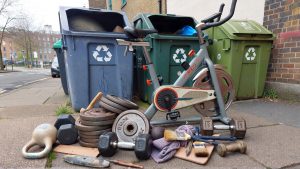
Attic Self Storage’s analysis of online search volumes shows a clear appetite for trying new pastimes. Creative classes are rising in popularity, with pottery topping the list at 1.6k monthly searches in London. Meanwhile, fitness continues to dominate hobby-related interest in the capital.
The top five most Googled classes are yoga (3.6k monthly searches), Pilates (2.9k), Zumba (2.4k), and boxing (1.9k). These figures reflect a city keen to invest time and money in self-improvement — but not always prepared for the long-term physical footprint these hobbies create.
In a city where the average home measures just 47m² and residents spend almost half of their income (42%) on rent or mortgage payments, there is little spare room — literally or financially — for bulky or short-lived hobbies. Exercise bikes, pottery wheels, home gym equipment, and specialist tools can quickly overwhelm limited space, pushing people to store them temporarily or discard them altogether.
As the Head of Stores at Attic Self Storage I want to stress that when hobby gear gets thrown out, it doesn’t just disappear. It often ends up in landfill, with some materials breaking down into microplastics that outlast the hobby by decades. While it’s always better to store items than throw them away, what’s worrying is how quickly many of these purchases are abandoned — sometimes after only a handful of uses.
I want to warn that the environmental impact of fast, disposable hobbies is easy to overlook amid busy city life. This isn’t only bad for the environment, but for our families and the planet our children will inherit. If more of this equipment was reused, repaired, or passed on, it could become something meaningful to share across generations instead of something that gets thrown away.
London’s Love of Cooking Is Worsening Its Food Waste Problem

The issue of waste doesn’t stop with physical equipment. Attic Self Storage’s report found that cooking is the most popular hobby in the capital, with 47% of Londoners engaging in it regularly. While this reflects a positive interest in home-cooked meals and creativity in the kitchen, it also exposes a stark contradiction. Government data shows that food waste is already the single largest component of household rubbish, accounting for 27% of the total. Nearly a fifth of that waste is still perfectly edible.
This reveals a troubling gap between intention and outcome. Cooking may be London’s most loved hobby, but rising food waste suggests that enthusiasm often outweighs planning. New recipes, bulk ingredient purchases, and aspirational cooking projects can quickly lead to spoiled food and overflowing bins — particularly in small kitchens with limited storage.
I notice that the pattern is consistent across many hobbies.
Whether it’s discarded boxing gloves, an unused home Pilates machine, or uneaten leftovers from ambitious cooking projects, the problem is the same. We’re consuming more than we can realistically sustain. Trying a new recipe or investing in exercise equipment isn’t the issue — the issue is not thinking about where it will live, how often it will be used, and what happens to it when the novelty wears off.
As Londoners continue to embrace new interests, Attic Self Storage encourages a more mindful approach to hobbies. Planning before purchasing, borrowing or buying second-hand equipment, and choosing activities with minimal physical waste can all reduce environmental impact while easing pressure on living spaces.
I also want to highlight low-waste hobbies as a practical alternative. Activities such as junk journaling, repairing household items, or sewing to mend clothes require minimal storage, reduce waste, and actively support sustainability. These hobbies are not only kinder to the environment, but they also fit better into the reality of London living.
Ultimately, the report suggests that while London’s enthusiasm for new hobbies shows no sign of slowing, the way those hobbies are chosen and managed will determine whether they enrich lives — or quietly contribute to a growing waste crisis.
Author Profile

- Always on the chase after hot and trending London and UK business news that disrupt, inform and inspire.
Latest entries
 Business Innovation NewsAugust 28, 2026IFB brings the Search for regulated financial Companies to Mobile
 EntrepreneurAugust 27, 2026The Office Debate Is Solving the Wrong Problem
 Business Innovation NewsAugust 26, 2026Evolve Catalyst Launches Professional Charity Registration Support
 Business Innovation NewsJune 17, 2026SeekaHost Technologies Launches DirectDine Helping Restaurants Reclaim Margins from Delivery Apps with 0% Commission Platform